The Great Barrier Reef Expedition 1928–1929
The world's first detailed scientific study of a coral reef — and one of the greatest marine science ventures of the twentieth century.
Captain James Cook recorded the existence of Low Isles in 1770, describing "a small low island." What followed was centuries of remarkable history.
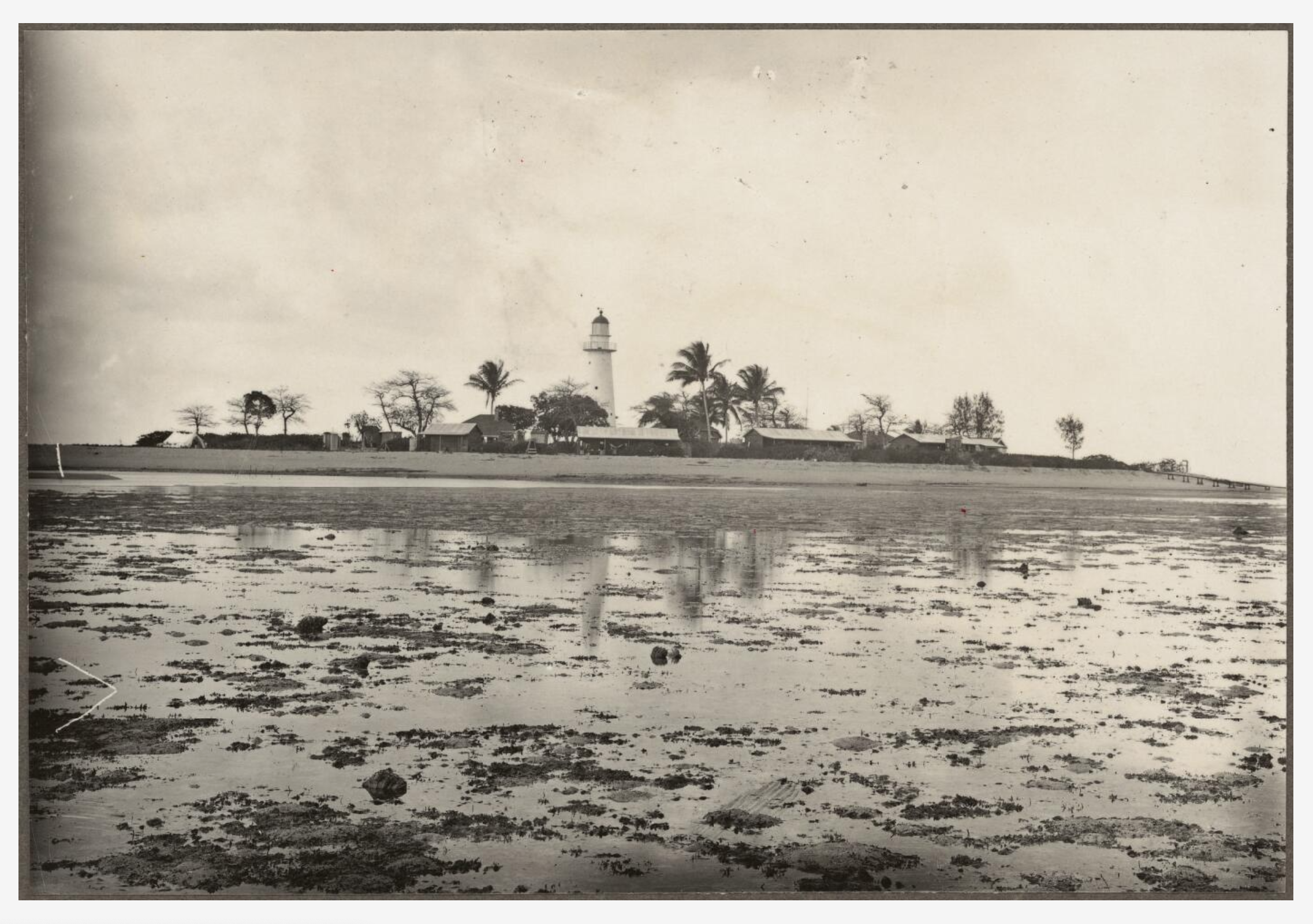
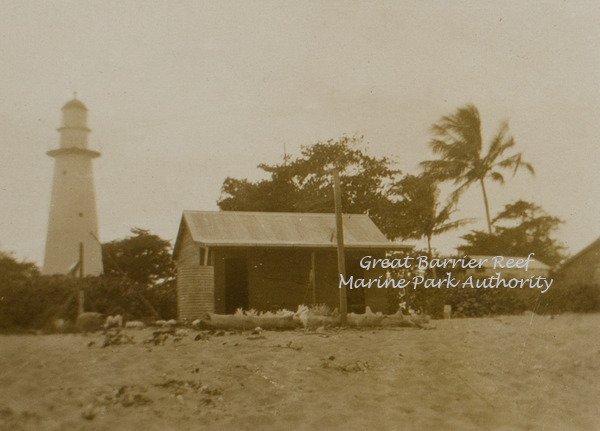
Officially named Low Isles in 1819, a lighthouse was built on the coral cay in 1878 — the tenth commissioned by the Queensland Government, helping create the longest shipping lane in the world. A continuous presence of lighthouse keepers remained until 1993 when the lighthouse was automated.
Low Isles holds deep cultural significance as Wungkun, an important Indigenous site for both the Kuku Yalanji and Yirrganydji peoples — long regarded as a peace island, a place to settle disagreements.
In 1928–29, Low Isles became the site of the first detailed scientific study of a coral reef anywhere in the world, led by Dr C.M. Yonge. It is one of the few coral reefs for which a long series of data exists, making it invaluable for contemporary reef research.
Access the expedition records
View the digital expedition journals, or download the 2022 Spencer & Brown research paper
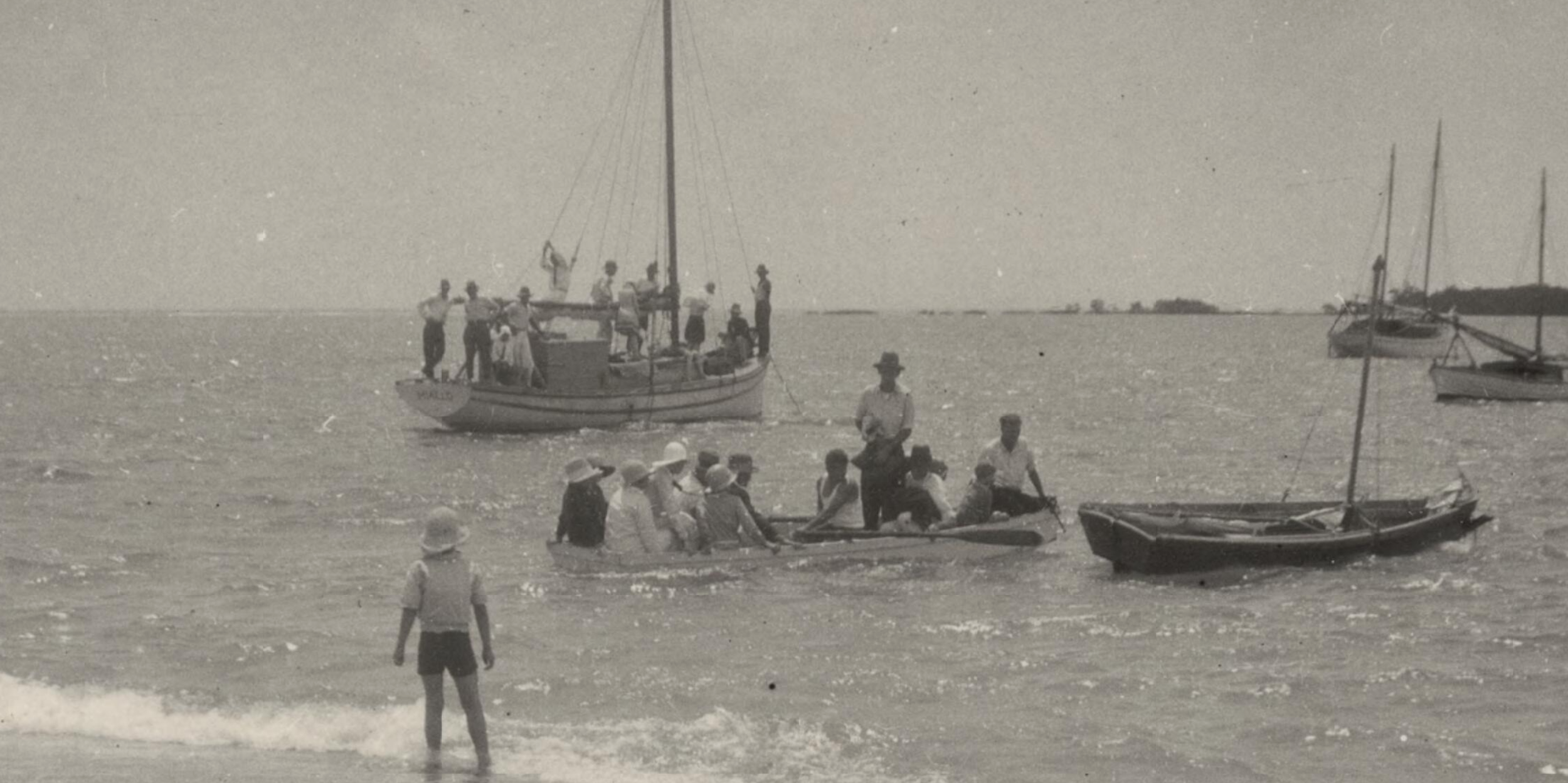
On July 16, 1928, twelve scientists arrived at Low Isles to begin thirteen months of research — the first detailed scientific study of a coral reef anywhere in the world.
Led by Dr C.M. Yonge at just 28 years old, the expedition was described as "the greatest marine science venture on a global scale since the Challenger oceanographic expedition more than fifty years earlier." The team — including his wife Mattie as medical officer — arrived in Brisbane in July 1928 after departing London in May, then travelled two and a half days by rail to Cairns before reaching Low Isles by launch.
At the height of activity there were 23 scientists on Low Isles, including five from the Australian Museum and additional British scientists who joined for shorter periods. Several Aboriginal labourers from Yarrabah and a cook provided additional support.
The expedition published seven volumes of scientific material, with results spanning coral physiology, bleaching events, tidal processes, water chemistry, transect surveys and much more. Maurice Yonge also published a popular audience book — A Year on the Great Barrier Reef (1930). The expedition journals are held at the Douglas Shire Library in Mossman.


"the greatest marine science venture on a global scale since the Challenger oceanographic expedition more than fifty years earlier."— James Bowen and Margarita Bowen, The Great Barrier Reef: history, science, heritage (2002)
A brief summary of the expedition — by Frank Carter
The Great Barrier Reef Committee was formed in Brisbane in 1922. In 1926 Sir Matthew Nathan was requested to interest British scientists in an expedition, enabling the team to depart on the liner Ormonde, arriving in Brisbane on July 9, 1928.
The Expedition left Brisbane by train on July 11, 1928 — a two-and-a-half day trip to Cairns (population then 7,000). On July 16 they travelled to Low Isles on the M.L. Daintree. The island was then about three acres (now about one acre due to erosion).
The huts had been erected by Queensland naturalist J.E. Young — comprising a 35×18-foot laboratory, dining room, living huts, a bathroom, and a hut for Aboriginal workers. The launch used was the Luana, a 39-foot ketch-rigged yacht loaned for the duration by owner A.C. Wishart.
Scientific instruments included: a thermograph, hydrograph, barograph, sunshine recorder, anemometer, automatic tide gauge, Secchi Disc for water clarity, and an Agassi's trawl. Lizard Island, Howick Isles, Pixie Reef and Michaelmas Cay were among the sites visited.
On April 24, 1929 four members sailed to Thursday Island and Torres Strait. The expedition left Low Isles on July 28, 1929 — after one year and twenty days.
Information from the writer's own experience, photos and details related by his parents, lightkeepers on Low Isles at the time, and A Year on the Great Barrier Reef by Dr C.M. Yonge.
Sir Maurice returns to Low Isles — 1978
Sir Maurice Yonge arrived back in far north Queensland in early 1978, accompanied by his second wife Lady Phyllis. With AIMS personnel, the Yonges conducted research in the Palm Islands Group before making a return visit to Low Isles.
By 1978 Sir Maurice had been elected a Fellow of the Royal Society (1946), awarded a CBE (1954), knighted (1967), and awarded honorary degrees from four universities. His extensive private library of ocean science was sold to AIMS in 1982, and gifted to JCU Library in 2016 where it is now held in Special Collections.
"I had the opportunity of revisiting Low Isles, off Port Douglas and the scene of the expedition I led 50 years ago… It was sad to find the reef surface, then the site of the richest possible array of living organisms and a natural experimental aquarium, now almost entirely dead. This appears to be the effect of sediment brought down by the Daintree River following the clearance of rain forest."
— Sir Maurice Yonge, report to AIMS, 1978. Information supplied by James Cook University.


A playground for science: Great Barrier Reef
The highpoint of scientific research in the early twentieth century was the British Expedition of 1928–29 to Low Isles. It was reported internationally and created great excitement in Australia and Britain. The Melbourne Argus reported on 13 December 1927 that the expedition had aroused more interest than any other topic at meetings of scientific societies in Britain.
The core group remained on the island for a year immersed in the wonders of the Reef. The scientists came to know the environments through all seasons and transformed these small coral cays into meaningful landscapes. Facilities were rudimentary — exposed to the elements, working in open laboratories.
Despite many discomforts, Yonge recalled that the genuine thrill of investigating and living among animals of which they had read so much but never expected to see kept scientists enthralled and motivated.
— Extract from A playground for science: Great Barrier Reef by Celmara Pocock
"…the little sand cay on which we lived and which we grew to know so intimately — every tree and every bush; I would say, every grain of sand — during the year that followed…"
— C.M. Yonge"Each pool has an exquisitely beautiful population of tiny coral fish, which for their adequate description need the knowledge of an ichthyologist, the imagery of a poet and the brush of an artist…"
— C.M. Yonge, 1930"Twenty scientists are living on that island for a year. It is not a rest cure by any means. But there are such a lot of delightful things to be collected in the place that they put up with the inconvenience."
— Sydney Morning Herald, November 1928