Life on Low Isles
Snippets from some of the historical residents — and the remarkable stories they left behind on this small coral cay.
'Come down in the world?' Assessing social status from a nineteenth century burial in Far North Queensland
This paper outlines the exhumation of the grave of Jane Ann Owen situated on Low Island — the first lighthouse keeper's wife. It examines the remote burial in the context of assessing social status from a nineteenth century burial.
The presence of a prosthetic dental attachment — an expensive gold maxillary dental plate with porcelain teeth — indicates Jane Ann was at one time reasonably affluent, which stands in contrast to the simple nature of her grave, lacking any of the accoutrements expected of someone of status or wealth.
The article documents the 2023–2024 exhumation, analysis, and respectful reinterment of her remains after coastal erosion threatened the historic gravesite, bringing together archaeologists, government agencies, Traditional Owners and LIPS in a collaborative heritage project.
The contrast between wealth and poverty present from the grave highlights how geographic isolation, limited access to funerary materials, and the urgency of burial in a tropical environment can mask social status in the archaeological record — and underscores the vulnerability of coastal heritage sites to sea-level rise.
📄 Read the full article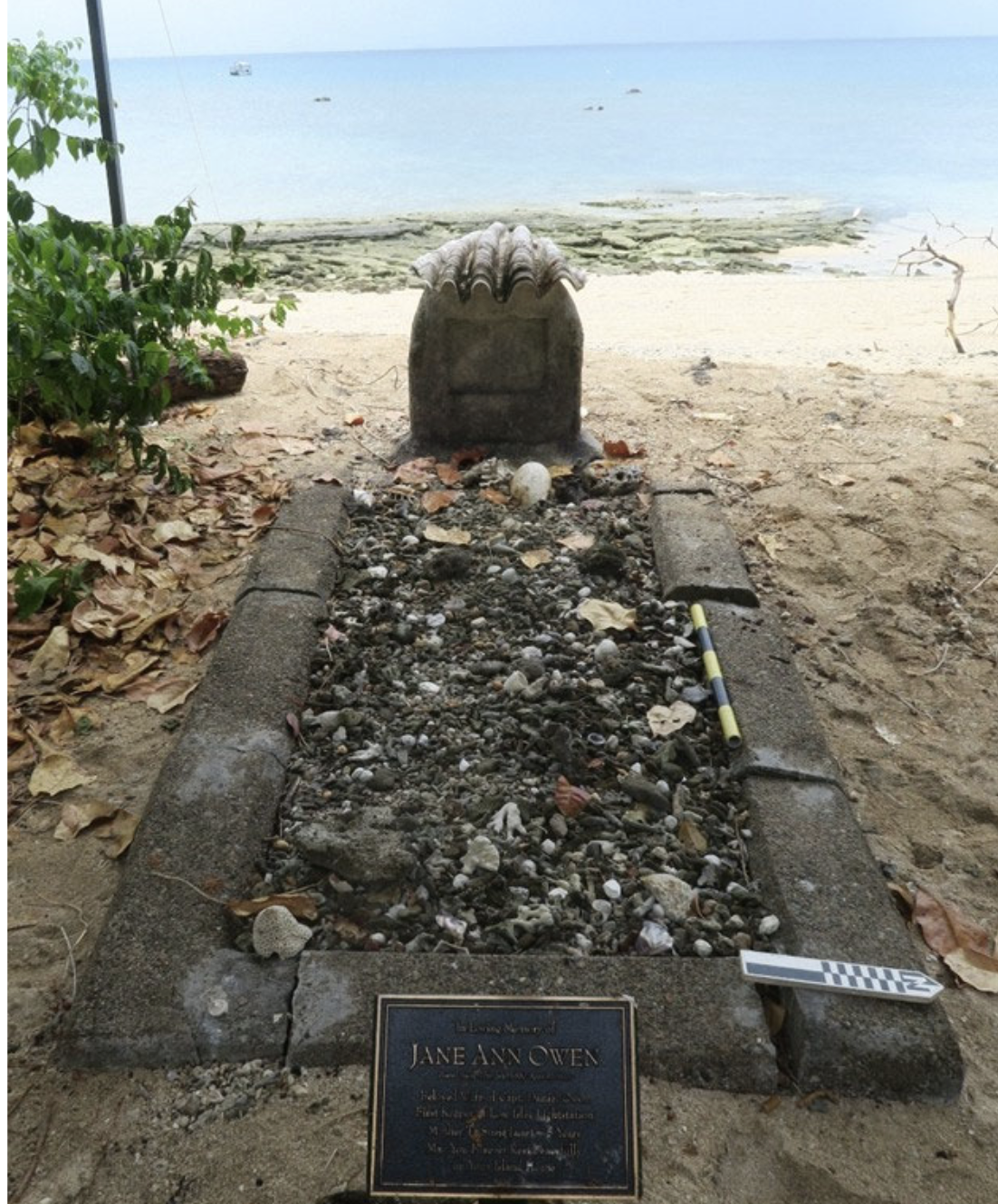
Life on Low Isles — historical images


Photographs taken by J. Jones in 1996, capturing the island in the years just after the lighthouse was de-manned and LIPS was established.

